How to Humanize AI Content: 9 Edits That Lower Your AI Score
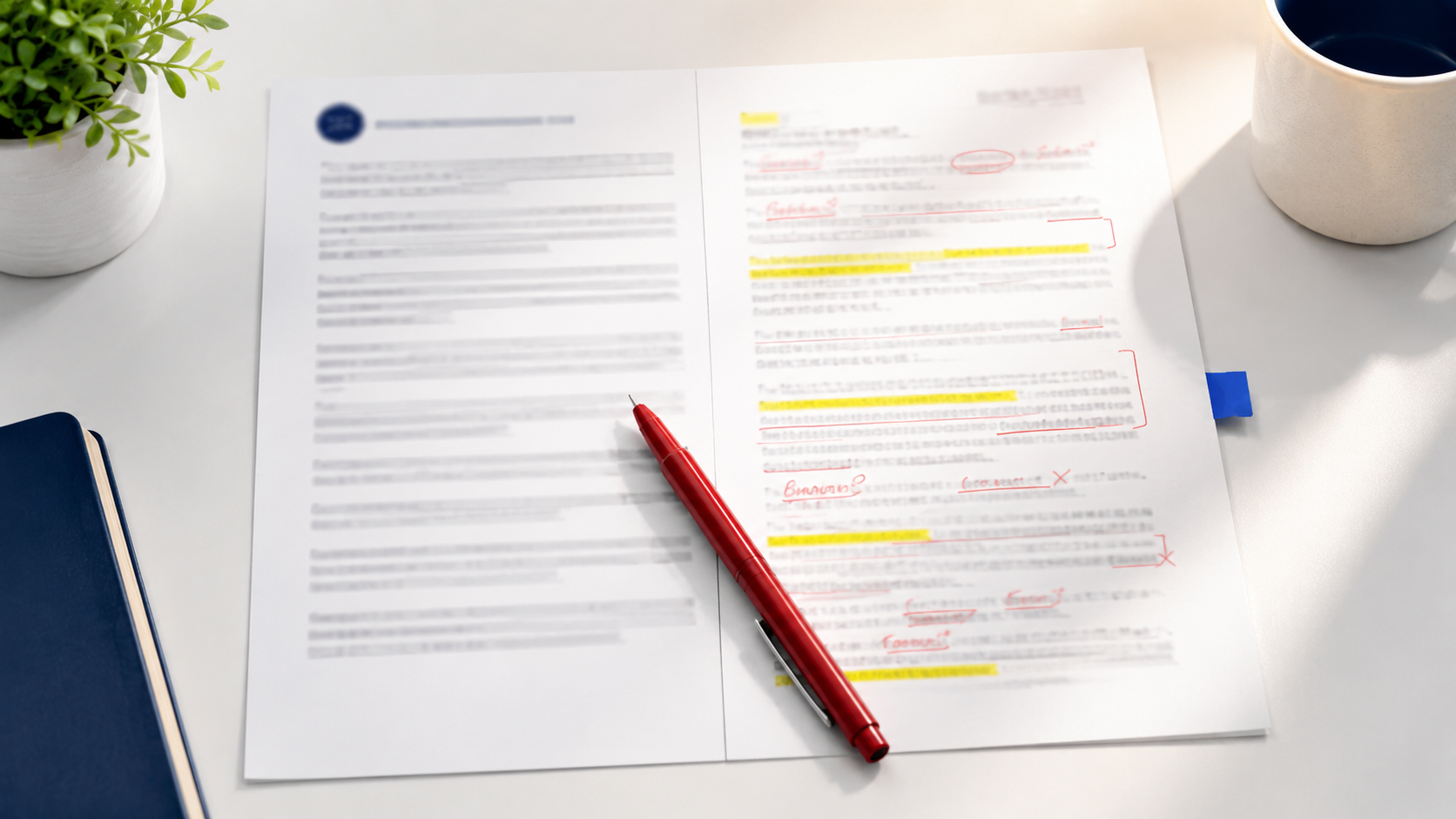
First, the uncomfortable truth: paid "AI humanizer" tools mostly just paraphrase your text with another AI. The output often reads worse than what you started with, and detectors are catching up to it fast. The reliable way to humanize a draft is still the boring way — targeted hand edits. The upside is that there are only about nine of them, they're mechanical, and you can verify each pass with a free AI score check.
One rule before we start. Humanizing is legitimate when the ideas are yours and AI helped with the drafting. It's not a way to launder plagiarism or cheat on coursework; a detector score isn't the thing that matters there, and lowering it doesn't fix the underlying problem.
1. Break the rhythm first
This single edit moves scores more than any other. AI writes sentences of nearly identical length, and that uniformity is measurable. Go through your draft and deliberately vary it. Chop one sentence to four words. Let another one run long. Read it aloud; anywhere your voice goes flat, the rhythm needs breaking.
2. Kill the em-dashes (most of them)
Keep one if it earns its place. Convert the rest to commas, periods, or parentheses. If your 800-word draft has nine em-dashes, a detector noticed before any human did.
3. Replace the radioactive words
Delve, tapestry, pivotal, seamless, testament, leverage, robust, elevate, holistic, myriad. Swap each for the word you'd actually say out loud: look into, mix, key, smooth, proof, use, solid, improve, complete, lots of. The plain word is almost always better writing anyway.
4. Delete the "not X, but Y" reframes
Say the actual thing. Drama templates read as AI because they carry emphasis without information.
5. Cut the significance tails
Any clause starting with "highlighting," "underscoring," "showcasing," or "reflecting the importance of" can usually be deleted whole. The fact was fine on its own.
6. Add one thing only you could know
A price you paid, a mistake you made, a client's odd request, the weather when it happened. Detectors can't measure lived detail directly, but readers can, and the specificity forces your own voice into the sentence. One concrete detail per few paragraphs changes the whole texture of a piece.
7. Use contractions and take a position
AI hedges: "it can be argued that this approach may offer benefits." You're a person. "This approach works, and I'd pick it over the alternative." Contractions alone nudge the score; an actual opinion nudges the reader.
8. Rebuild the bold-bullet lists as prose
The "- Term: sentence repeating the term" structure is ChatGPT's fingerprint. Either write real prose or keep the list but make each item say something the label doesn't already say.
9. Delete the conclusion that summarizes
If your last paragraph starts with "In conclusion" and restates your headings, cut it and end on your strongest specific point instead. Endings are where AI is at its most robotic and humans are at their most memorable.
The workflow that actually works
Run your draft through the checker before editing and note the score. Do edits 1–3, run it again. Do 4–9, run it a third time. Watching the number fall tells you which habits are doing the damage in your writing specifically — most people discover they have two or three dominant tells, not all twelve. The full list of patterns, with examples, is in our guide to the signs of AI writing.
No limits, no sign-up, and your draft never leaves your browser.
Check your AI score